
Most believe financial freedom is blocked by a lack of capital or a lack of opportunity. They say things like “It takes money to make money,” or “They got lucky with that deal—I’m not.” What’s striking is that the people who know the least often feel the most certain. They believe they already understand how investing works and often say they are being realistic, without realizing how limited their understanding actually is.
I was once one of those people. After graduating from the University of Minnesota with a B.S. in Finance and a 3.8 GPA, I was confident I knew how money worked, but in reality, I understood very little about how real wealth is actually created.
Psychologists call this pattern the Dunning–Kruger effect. It describes a cognitive bias where people with low levels of knowledge tend to overestimate their competence. Assumptions feel like facts while confidence comes easily because there is very little internal friction.
Investors who truly understand a subject experience the opposite. As knowledge expands, more information reveals more variables and experience exposes blind spots. From the outside, the results can look like luck or magic. From the inside, they are simply the product of deeper understanding.
The Alchemy of Knowledge is the process by which understanding transforms constraints into options. Inside our Value Add Network, we sometimes call it MAGIC. The results look mysterious until the mechanics behind them are understood.
Let me define this in a simple example.
You want financial freedom.
You believe cash flow from rentals is the right path.
You find a property priced at $1,000,000.
You know that you need 25% or $250,000 down.
You don’t have $250,000 in cash.
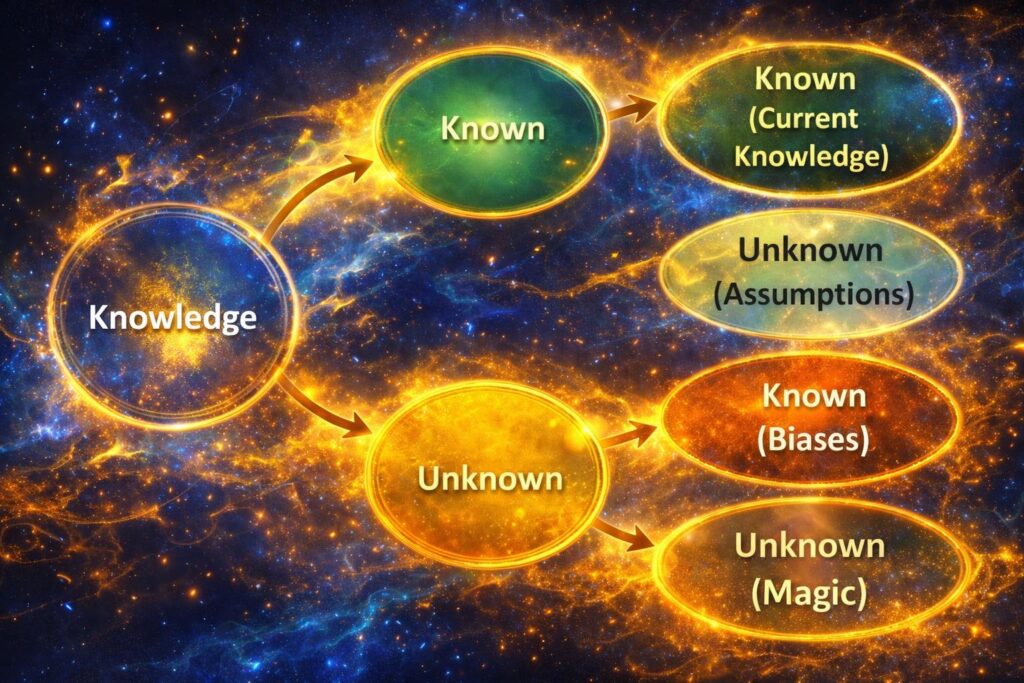
To understand why this moment becomes a dead end for so many, we need to look at the four zones of knowledge. Every decision you make lives in one of these zones. Most people never learn to distinguish between them and confusion is what keeps them stuck.
You can become an Alchemist.
My first real encounter with alchemy came when I met Greg Pinneo at his Power Players intensive event. My mind was blown. I experienced multiple aha moments—deep realizations that shifted how I saw investing, people, and myself. Greg approach was different, he spoke about romantic real estate—not just deals and numbers, but meaning, philosophy, and poetry woven into the Art of The Deal. He referenced thinkers like Henry David Thoreau and Rudyard Kipling, framing real estate as a personal and philosophical journey rather than a purely financial pursuit.
I attended Power Players three times and literally, investigated in every educational course Greg ever offered. I wasn’t just learning strategies—I was being exposed to a new way of seeing the world.
What You Know (Known Knowns)
These are facts you understand and accept without hesitation.
In this example:
• You know freedom requires recurring cash flow
• You know rental properties produce cash flow
• You know the asset costs $1,000,000
• You know a 25% down payment is required
• You know you don’t have the down payment
From these facts, you draw a conclusion:
“I need to save money and buy this property sometime in the future.”
This conclusion feels logical and realistic.
Yet this is where the first illusion appears. Knowing facts creates confidence, but confidence does not equal competence. Limited knowledge creates the impression that the situation has been fully evaluated.
What You Know You Don’t Know (Known Unknowns)
Known Unknowns are gaps you can clearly identify.
In this situation:
• You don’t know where to get $250,000
• You don’t know how to raise capital
• You don’t know how to buy the property without the down payment
At this stage, most beginners arrive at a familiar conclusion:
“I guess I just need to save more money.”
Once again, this feels realistic.
It is also a direct result of limited awareness. When the range of known solutions is narrow, the mind treats that range as complete.
What You Know—but Aren’t Using (Unknown Knowns)
This is where most people quietly sabotage themselves. Unknown Knowns are options you technically know exist, but refuse to consider because of assumptions, fear, or identity.
In this example:
• You know people invest passively in real estate, but you assume they wouldn’t invest with you
• You know partnerships exist, but you assume you would lose control or get taken advantage of
• You know sellers sometimes help buyers, but you assume that wouldn’t apply to you
• You know creative deal structures exist, but you assume they are reserved for “real investors”
So instead of exploring alternatives, you default to what feels familiar:
“I’ll just save the money.”
This is not a lack of intelligence. It is confidence built on incomplete picture.
What You Don’t Know You Don’t Know (Unknown Unknowns)
This is where Alchemy and magic happens. Unknown Unknowns are not risks or mistakes. They are unseen options.
In this example, you may not yet know:
• That there are people actively looking to invest in well-structured value add joint ventures
• That capital stacks can be designed to align incentives between parties
• That creative financing structures can provide 90–100% financing
• That when you become a person of value, many will want to invest with you
• That sellers of distressed properties often offer financing to reduce or eliminate down payments
Until you are exposed to these ideas, they do not feel unavailable. They feel nonexistent. Awareness changes outcomes because what once looked impossible begins to look obvious.
Most people remain stuck for three reasons.
1. They treat Known Unknowns as permanent barriers.
2. They never challenge their Unknown Knowns.
3. They are obvious to the options in Unknown Unknowns.
They believe they are being realistic by operating only within their current level of awareness. While in reality, they are simply under-informed.
Most people look for answers while they need to learn to ask better questions.
Instead of asking:
“How do I save $250,000?”
Ask:
“What structures exist that would allow this deal to close without me bringing $250,000 of my own cash?”
Then ask a deeper question:
“What kind of person do I need to become to attract deals, partners, and capital?”
These questions open the door to:
• Joint-venture capital partners
• Creative financing with sellers and partners
• Private lenders financing most or all of the deal
• Capital stack design using senior debt, mezzanine debt, and equity
You can become an Alchemist.
My first real encounter with alchemy came when I met Greg Pinneo at his Power Players intensive event. My mind was blown. I experienced multiple aha moments—deep realizations that shifted how I saw investing, people, and myself. Greg approach was different, he spoke about romantic real estate—not just deals and numbers, but meaning, philosophy, and poetry woven into the Art of The Deal. He referenced thinkers like Henry David Thoreau and Rudyard Kipling, framing real estate as a personal and philosophical journey rather than a purely financial pursuit.
I attended Power Players three times and literally, investigated in every educational course Greg ever offered. I wasn’t just learning strategies—I was being exposed to a new way of seeing the world.
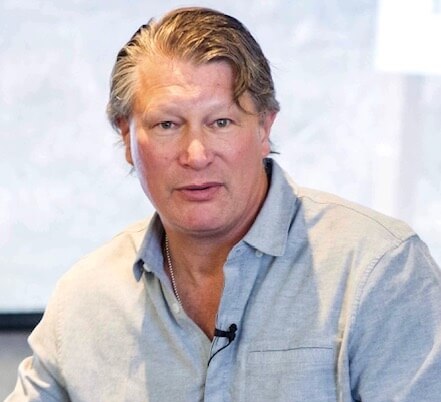
Another true Alchemist in my life has been Alex Ugorets, my amazing mentor from Tonka Bay. Alex taught me the power of being generous and fair. He showed me the psychology behind value-add investing—not just how to improve buildings, but how to elevate people, relationships, and create win-win outcomes. More importantly, he made himself available. Any question I had along my real estate journey, he answered—openly, patiently, without ego. He predicted outcomes, knew the answers to most of my questions. Several times my view points differed in the beginning and when I didn’t listen to him I lost money only to realize that his frame was so much clearer than mine. Alex knew what I assumed to know, but was wrong. Those were good but costly lessons in humility.

Over time, I realized something profound: there are people you meet who change your trajectory so completely that life afterward is no longer on the same path. One conversation, one mentor, one moment of insight can alter the direction of your future in ways that feel almost unbelievable.
To me, Alchemy is the transformation of lead into gold inside your mind! This example can be applied to finding deals, raising a fund or even building a $100M portfolio. An alchemist is not someone who works 16 hour days, crazy genius or simply got lucky. An alchemist is someone who understands what is possible and knows how to create results that seem magical to those who are unaware.
Alchemy lives at the intersection of financial structure, human psychology, and your value-add mindset.